Test Anxiety
Test anxiety does not have to hold you back. Discover helpful preparation methods, stress management techniques, and professional support services.
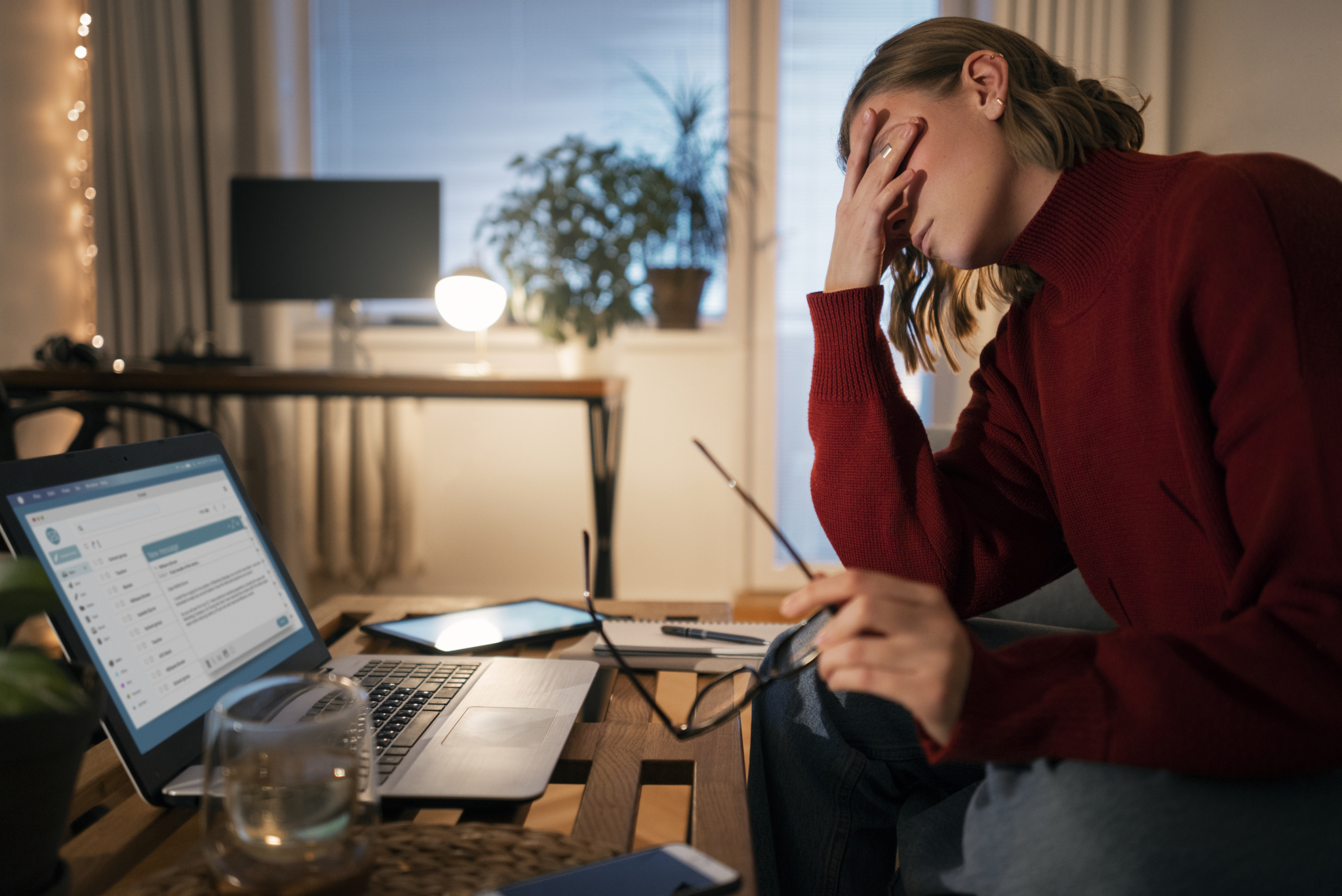
What is test anxiety?
Anxiety itself is a reaction of our organism to a threatening situation in forms of excitement, palpitations, nausea, or sweating, among other things. If this anxiety relates to a performance or examination situation, it is referred to as examination anxiety or social assessment anxiety.
In principle, excitement, nervousness, or fear before an examination are normal and can even serve to promote performance to a certain extent. However, if the fear impairs performance or leads to suffering for the person concerned, it can become a serious problem.
If the fear of the performance situation becomes too big, it can lead to mental blocks or blackouts during the exam. This fear can also lead to psychosomatic problems such as insomnia, eating disorders, nausea, gastrointestinal problems, heart palpitations, sweating and the like, or it can severely impair the learning process.
Where does test anxiety come from?
Exam nerves are mainly caused by fear of the consequences of failure, such as ridicule, loss of status or loss of face, rather than the fear of failure itself. Those affected are afraid of embarrassing themselves, being laughed at or rejected. Exam nerves can have different causes. For example, too high expectations, self-doubt, negative previous experiences, stories told by third parties or external pressure can all contribute to lacing fears.
For many of those affected, the fear of the consequences of failure or failure itself develops a momentum of its own that often can no longer be controlled. This can lead to learning becoming increasingly difficult and learning performance and preparation for exams suffering greatly. Based on this, in most cases the fears intensify again. A negative cycle has begun, and you feel that you can no longer cope with the situation.
Let’s Talk About It: Overcome Exam Anxiety
(This Talk is only available in German)
Let’s Talk About It with Dr. Julia Zuber. Many students are familiar with the feeling of exam anxiety. This online talk offers students empathetic and practical guidance on overcoming exam anxiety. Whether you experience occasional nervousness or severe exam anxiety, the talk will provide you with supportive strategies and tips for approaching exams with more calm and confidence.
To view this content, please the marketing cookies
Coping with exam anxiety – what can I do?
There are various ways to counteract test anxiety:
Improve your Study technique
If you don’t have a good overview of the exam material or don’t know it well enough, this can lead to anxiety. Improving your learning technique can help you understand the material better and faster. Learning time management, self-discipline can also help.
Jotting down or underlining something here and there and flicking aimlessly through books hardly helps to build up knowledge. Through proper preparation, it is possible to optimize the learning process. Drawing up a study plan, creating an overview of the subject matter and the time available, as well as dividing up the topics accordingly and planning buffer times can considerably reduce the stress in the study phase and thus the anxiety before the examination.
If you want to find out more about different learning techniques, take a look at our Article on this topic!
Define Requirements
Define Requirements
Information on the form of the examination, the assessment criteria, material and examination questions themselves help to better assess the situation. This can reduce the fear of the exam. Use the possibility of asking your professor before the exam about the modalities, through that you can find out important information and clues which help you corretly prioritizing the materials.
Set realistic standards
Goodbye perfectionism! If you let go of thoughts of peak performance, you automatically relax. This does not mean, however, that you should no longer make demands on yourself; they should only be realistic and adapted to the circumstances and requirements of the situation. If you also remind yourself of previous successes, your own abilities and strengths, a positive attitude can be reinforced, and anxiety can thus be reduced or even banished altogether.
Incorporate success controls
Success checks help to identify where there is still a need to catch up and what is already well established. Regularly checking your learning success makes you feel more confident. This gives you an overview of which areas of the exam material you have already mastered, and which still need to be intensified.
Take breaks
Take breaks
Our brain is not endlessly receptive but needs regular breaks in order to stay fit. It is important that you occupy yourself with something other than the subject to be studied during the breaks.
Pay attention to performance phases
Every person has an individual biorhythm. Based on this rhythm, there are different times of day when you can work at full speed. For example, some people concentrate best in the early morning, while others only get into top form in the afternoon. If you know your own rhythm, you can organize your learning phases accordingly.
Practise exam situations
The more familiar the situation, the less anxiety it triggers. This also applies to exams. The more learning checks, sample tests or sample exams are carried out under conditions that are as realistic as possible, the less anxiety there will be in the actual exam situation.
Get support
Get support
Many people find it difficult to admit to fears. But talking to other colleagues or getting professional support can help you break out of the vicious circle of exam anxiety.
If you are looking for (anonymous) support to talk about your worries, reach out to our "Mental First Aid"-Team
Think positively
Think positively
It sounds easy, and it is. Sentences such as “I can do it” or “I can solve this task” help you to believe in yourself and go into the exam with good thoughts. Always putting yourself down and thinking pessimistically lead to long term sturrgles with your own self worth and can negatively impact your performance and your psychological wellbeing. A positive mindset automatically makes you more relaxed and the exam situation less scary.
Understanding your fears
To overcome fears, it is essential to understand them. It often helps to write down your fears and worries. If you become aware of what exactly you are afraid of or what triggers and/or intensifies this fear, you can deal with it more easily and constructively. Writing things down can also help to reduce stress and clear the mind.
Mental training and relaxation techniques
Relaxation exercises, breathing techniques, autogenic or mental training and mediation can help before the exam and reduce stress. Some exercises can also be used easily and unobtrusively during the exam. To be able to use the various techniques quickly, they should be practiced and learned regularly beforehand.
If you want to learn more about relaxation, take a look at our Article on this topic!
More tips and information
Quick Links
I'll help you choose your study program.