Your Stay in Austria
Austria at a glance. Learn about its culture, geography, laws, and life as an international student.
Welcome to Austria!
The GDM-K warmly welcomes all international students to Austria. Finding your way in a new culture can be challenging, so we have put together some information and tips for your stay here in Austria.
If you are looking for more information about the University of Applied Sciences (FH), feel free to explore the Compass further!
Quick Geography Lesson
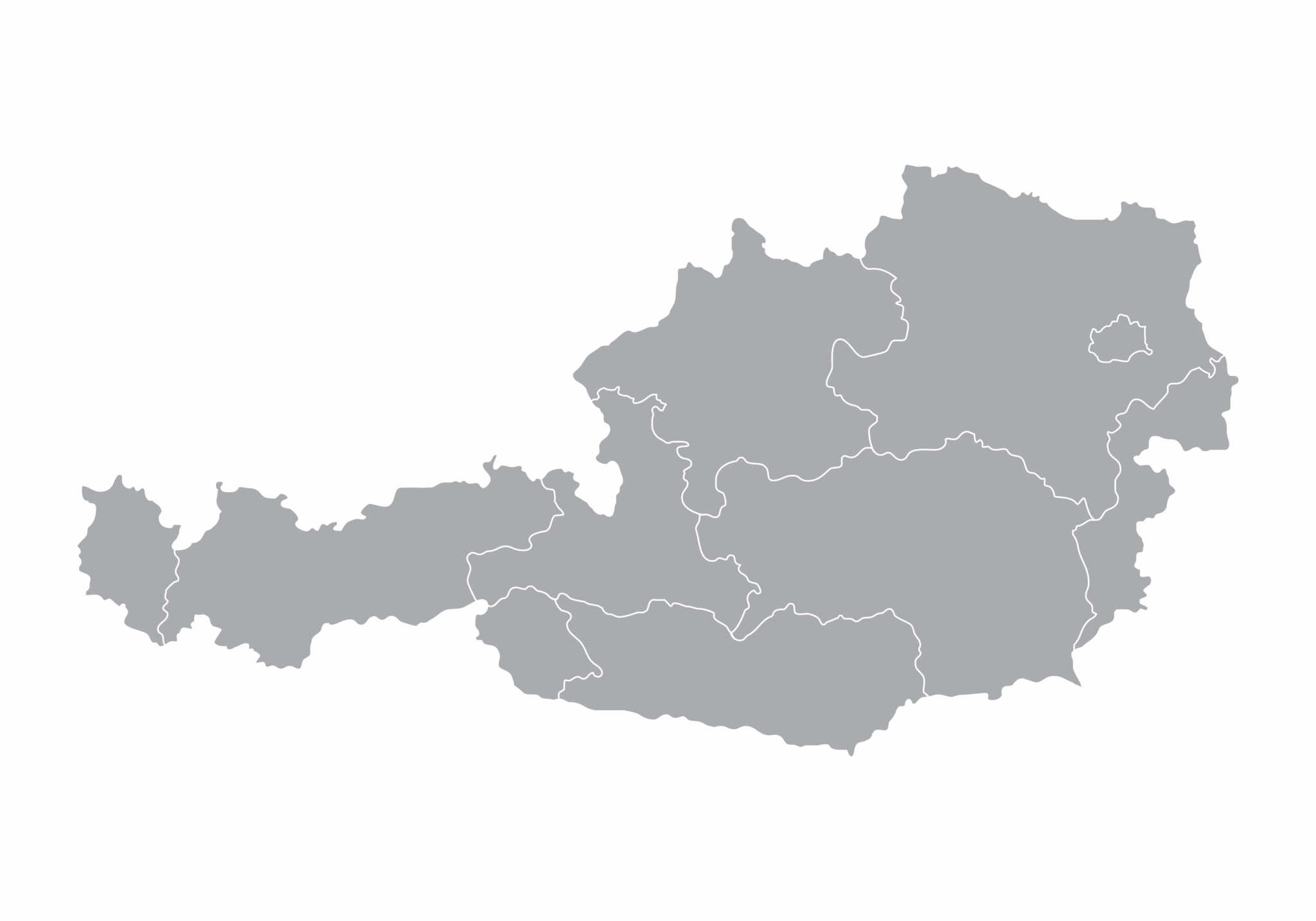
You have probably already done some research before arriving here. Nevertheless, here is a short geography lesson in case you still have some questions.
Vienna
Vienna
Vienna is Austria’s federal capital and therefore probably the country’s most well-known state. You can travel from Upper Austria to Vienna by train in only about 1.5 hours, making it perfect for a day trip. You could plan this with other international students or with your Buddy.
If you would like to visit Vienna during your stay, here are some of the main attractions:
1st District – Innere Stadt (Inner City)
- St. Stephen’s Cathedral
- Hofburg Palace
- Graben and Kärntner Straße
- Vienna State Opera
- Albertina Museum
- City Hall and the Ringstraße
2nd District – Leopoldstadt
- Vienna Prater
- Giant Ferris Wheel
- Danube Canal
3rd District – Landstraße
- Belvedere Palace
- Botanical Garden
- Art and cultural attractions around the Belvedere
6th and 7th Districts – Mariahilf & Neubau
- Mariahilfer Straße (shopping)
- MuseumsQuartier
- Trendy cafés, restaurants, and cultural venues
13th District – Hietzing
- Schönbrunn Palace
- Schönbrunn Zoo
- Gloriette and Palace Gardens
- One of Vienna’s most visited tourist attractions
Burgenland
Burgenland
Burgenland is Austria’s easternmost federal state. From Upper Austria, it takes about three hours by car to get there. It is especially known for its wine culture, castles and palaces, and Lake Neusiedl, which is one of Austria’s most popular sailing and surfing destinations.
Lower Austria (Niederösterreich)
Lower Austria is Austria’s largest federal state by area. It is divided into the Waldviertel, Weinviertel, Mostviertel, and Industrieviertel regions. It is particularly popular for its nature and its many hiking and cycling routes along the Danube. Depending on the region, Lower Austria is not far from Upper Austria, making it ideal for day or half-day trips.
Styria (Steiermark)
Styria (Steiermark)
Styria is Austria’s second-largest federal state by area and is known as the “Green Heart of Austria.” It is a hotspot for hiking and skiing enthusiasts. Styria is also famous for its cuisine. Graz, the capital of Styria, is Austria’s second-largest city and offers plenty for culture lovers.
Carinthia (Kärnten)
Carinthia (Kärnten)
Carinthia is Austria’s southernmost federal state and is especially popular in summer thanks to its many lakes, mountains, and sports opportunities. Due to its southern location, it is one of Austria’s sunniest and warmest regions, making it a favourite summer vacation destination. If you are spending the summer semester or holidays in Austria, it could be a great destination for a weekend trip.
Salzburg
Salzburg
Salzburg is much more than just Mozart, although he naturally plays an important role. Culture enthusiasts will feel especially at home here. The Baroque Old Town, "Hohensalzburg" Fortress, and numerous castles throughout the region are must-sees for history fans. For active people, Salzburg offers excellent hiking opportunities in summer and paradise-like skiing and snowboarding conditions in winter. From Upper Austria, Salzburg city can be reached by train in about 1.5 hours, making it perfect for a day trip.
Tyrol (Tirol)
Tyrol (Tirol)
Tyrol is divided into North Tyrol and East Tyrol, which are both in Austria, and South Tyrol, which belongs to Italy. Tyrol is particularly famous among winter sports enthusiasts for its numerous ski resorts and luxury hotels.
Vorarlberg
Vorarlberg
Vorarlberg is Austria’s westernmost federal state and is known for its distinctive dialect and proximity to Switzerland. It is also especially famous for winter sports, but Lake Constance offers cooling opportunities in summer. The Bregenz Festival is a major annual cultural event. From Upper Austria, Vorarlberg is the farthest destination, with a travel time of approximately five hours.
Upper Austria (Oberösterreich)
Last but not least: Upper Austria. The home state of the University of Applied Sciences Upper Austria has a lot to offer. Linz, Austria’s third-largest city, combines historical sights with technological innovation.
You will probably spend most of your time in Upper Austria during your stay—and don’t worry, you certainly won’t get bored. From all four FH campuses, it is easy to reach Linz, and public transportation connections throughout Upper Austria are excellent. The region also offers many hiking trails and beautiful natural landscapes. A special treasure of Upper Austria is Hallstatt.
Dialect 101
One of the first things people notice when they come to Austria is the dialect. There is no single “Austrian dialect”, but rather many different dialects depending on the region and state. The Upper Austrian dialect (also called “Mundart”) is one of the closest to Bavarian.
Most lecturers and fellow students will try to speak clearly and avoid dialect when they know someone is present who is not familiar with it. However, during your stay, you will inevitably encounter some dialect expressions. Here are some of the most important terms:
- Grüß Gott – A traditional formal greeting; equivalent to “Good day” and used regardless of religious beliefs.
- Grias di / Servus – Informal greetings; equivalent to “Hello.”
- Goi – Used to seek confirmation; e.g., “You feel the same way, don’t you?”
- Voi – Used as agreement or emphasis; similar to “totally” or “absolutely.”
- Schauen – To look / to see.
- Schau ma moi – A phrase that reflects the Austrian mentality; means “Let’s wait and see.”
- Oida – Informal term for a person; similar to “dude” or “mate.”
- Fix – An expression of strong agreement; “definitely.”
- Patschert – Clumsy, awkward.
- Bim – Tram/streetcar.
- Pfiat di – Informal farewell; “Bye.”
- Wiederschauen – Semi-formal farewell; “Goodbye.”
This list could go on forever. If you are interested in more Austrian dialect terms, you can check this out.
Culture, Customs, and Festivals
If you spend a semester, a year, or your entire studies in Austria, you will eventually encounter customs and traditions that are deeply rooted in Austrian culture. Since Austria is historically a Catholic country, many holidays and traditions have religious origins. However, everyone is welcome to participate in and learn about them.
Autumn - Winter
Autumn - Winter
- Halloween - Not originally an Austrian tradition, but it has become an established part of modern culture. Some faculties even organize Halloween parties, making them a great opportunity to meet people at the beginning of the semester.
- Harvest Festival (Erntedank) - A celebration of gratitude for a successful harvest. Many communities create a “harvest crown,” which serves as the centerpiece of the festivities. This tradition is especially common in smaller villages.
- Mostkost - When fruit falls from the trees in autumn, people produce large amounts of cider (“Most”). Tastings are simply called “Mostkost.”
- National Day - Austria’s National Day is celebrated on October 26 and commemorates the declaration of neutrality signed in 1955.
- St. Martin’s Day - Celebrated on November 11, honoring Saint Martin. The traditional “Martin’s goose” meal is especially popular during this time.
- Lantern Festival - A highlight for children, but enjoyable for adults as well. People walk through the streets carrying lanterns—often handmade—and sing together.
- Perchten Runs - Between November and January, people dress as frightening mythical creatures called Perchten. Through loud noises and bells, they symbolically drive away evil spirits. Spectators should be prepared for some rough interactions and possibly a few bruises.
- Advent - The Advent season refers to the four weeks leading up to December 24, when Christmas is celebrated in Austria. Many families have an Advent wreath with four candles, one of which is lit each Sunday. Since this period is associated with gratitude and togetherness, it is a perfect time to enjoy cozy evenings with friends.
- Christmas Markets - Also known as Advent markets, these markets take place from late November until December 24. They offer hot punch, sweets, regional food, market stalls, and occasionally carousels and other attractions.
Spring - Summer
Spring - Summer
- Carnival (Fasching) - The carnival season runs from November to February. Its peak is Faschingsdienstag, the day before Ash Wednesday and the beginning of Lent. Celebrations include costumes and traditional doughnuts (Krapfen).
- Maypole Raising - Throughout Austria, decorated tree trunks known as maypoles are erected in May. Maypole festivals are held on May 1, and climbing the pole is often part of the celebration. Guarding the maypole from being stolen before May 1 is itself a beloved tradition.
- St. Florian’s Day - On May 4, Upper Austria celebrates its patron saint, St. Florian. While not a public holiday, it holds cultural significance in the region.
- Kirtag - Traditional village fairs. Originally they celebrated the consecration of a church, but today they are known for market stalls, food, and a festive atmosphere. They take place throughout the year in various towns and villages.
- Midsummer Bonfires (Sonnwendfeuer) - This summer tradition celebrates the longest day of the year with large bonfires.
What Linz Has to Offer
As the capital of Upper Austria, Linz hosts many popular events:
- Urfahraner Market - Held twice a year in Urfahr—once in autumn (first week of October) and once in May (first week of May). A must-visit for amusement park and street food fans.
- Linz Pflasterspektakel - An annual summer street arts festival featuring performers, magicians, comedians, musicians, and artists from around the world. Best of all, it is free to attend.
- Bubble Days - Held in June at Linz Harbor. Perfect for people who enjoy live music and festivals.
- Ars Electronica Festival - Held annually in September and recognized as one of the world’s largest exhibitions for media art.
- Klassik am Dom & Klangwolke - Not everyone wants to party (all the time). These events offer large-scale classical music experiences that transform the city into a cultural stage.
- Next Comic Festival - A great alternative to the famous Comic Cons (which can be visited in Wels), offering comic fans and self-proclaimed nerds plenty to enjoy.
- Crossing Europe Film Festival - A major film festival that gives movie lovers the chance to discover new films while supporting emerging filmmakers.
- Curiosities Flea Market - Every Saturday from 6:00 a.m. to 2:00 p.m. at Linz’s Main Square. A great place to hunt for hidden treasures at unbeatable prices.
Important Rules and Laws
See RIS
Here is a brief overview of important rules and laws in Austria:
- Drinking and Driving – For most drivers, the legal blood alcohol limit is below 0.5‰. Violations can result in high fines and license suspension.
- Seat Belt Requirement – All passengers must wear seat belts. Children require age- and size-appropriate child seats.
- No Phone Use While Driving – Mobile phones may only be used with a hands-free system while driving. Texting is prohibited.
- Indoor Smoking Ban – Since 2019, smoking has been prohibited in restaurants, bars, and other public indoor spaces.
- Night-time Quiet Hours – In most municipalities and residential areas, special consideration is required between 10:00 p.m. and 6:00 a.m. Loud music and parties may lead to complaints and fines.
- Waste Separation Is Mandatory – Austria places great emphasis on recycling. Paper, plastic, glass, organic waste, and residual waste are collected separately. Incorrect disposal may result in fines.
- Identification Requirement – You should always carry a valid photo ID (e.g., passport or national ID card) and be able to present it when required.
- Fare Evasion Is Expensive – A valid ticket is required for public transportation. Being caught without one can lead to substantial penalties.
- Alcohol and Tobacco Age Limits – Alcohol and tobacco products may generally only be purchased from the age of 18. Beer and wine may be consumed from age 16.
- Respect Private Property – Entering private property without permission is not allowed. In rural areas, paths, fields, and property boundaries should be respected.
Quick Links
I'll help you choose your study program.