Sustainability-Focused Students from FH Upper Austria’s Wels Campus Analyze Energy and Water Systems at an Ethiopian Hospital
Students of the “Sustainable Solutions” Program Are Experts for a Resilient Future

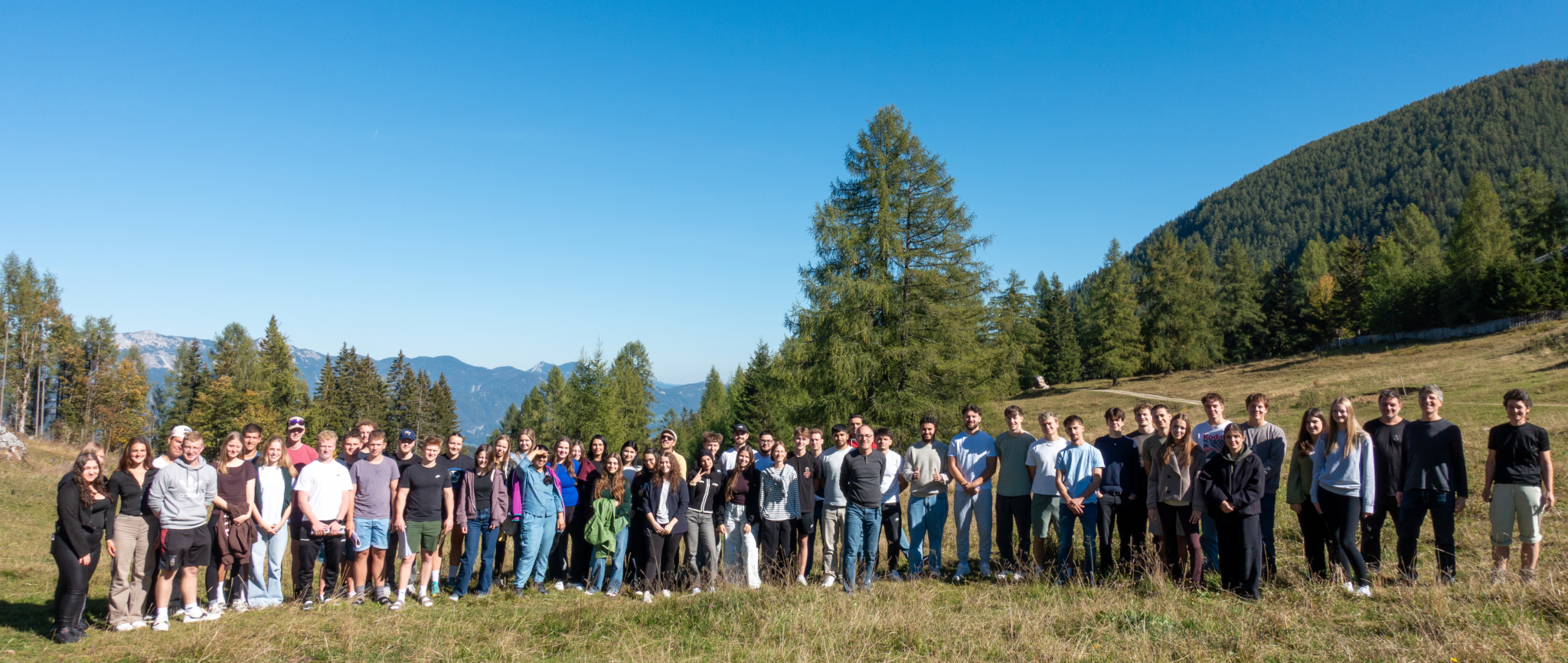
The project participants traveled to Ethiopia as part of their “Technical Sustainability Project,” where they assessed opportunities to optimize resource use at a hospital in the city of Hawassa.
Photo credit: Kuttner (private)
Creating resilient and sustainable infrastructure is one of the key challenges facing the African continent. Cooperation between Africa and Europe offers valuable opportunities for mutual learning and innovation. As part of their curriculum, students enrolled in the Sustainable Solutions bachelor's degree program at FH Upper Austria's Wels Campus dedicated their Technical Sustainability Project to improving resource efficiency at a hospital in the Ethiopian city of Hawassa. The project spanned the entire summer semester, including a one-and-a-half-week field visit to Ethiopia.
The project's objective was to develop an energy balance, water balance, and environmental assessment for the Bushulo Mother and Child Specialty Center, located near Hawassa, approximately 300 kilometers south of Ethiopia's capital, Addis Ababa. The initiative was carried out in cooperation with the Catholic aid organization MIVA and its subsidiary BBM, which has been supporting the planning and development of the hospital's technical infrastructure for several years.
The collected data now serves as the foundation for developing sustainable energy scenarios for the facility. One specific focus was the design of a reliable long-term energy supply for a new diagnostic laboratory. The students assisted local technical staff in determining the required storage capacity and sizing of a photovoltaic system.
A Holistic View of Infrastructure
The students evaluated the proposed energy scenarios from technical, environmental, and economic perspectives. In addition, they developed a methodological framework that can support future energy and sustainability projects at the hospital.
Beyond the technical analyses, direct collaboration with local stakeholders played a central role. The students gained valuable insights into development cooperation in practice and worked closely with local professionals to create solutions tailored to on-site realities and needs.
a { text-decoration: none; color: #464feb; } tr th, tr td { border: 1px solid #e6e6e6; } tr th { background-color: #f5f5f5; }
Collaboration Across Engineering, Medicine, and Administration
“The students carried out extensive technical assessments on site. They analyzed the hospital's energy and water supply systems, recorded consumption data, and conducted numerous interviews with staff working in technical services, administration, and medical departments,” explains FH-Prof. Dr. Christiane Rau, Head of the Sustainable Solutions degree program.
According to Rau, the team also installed several electricity monitoring devices that will provide important consumption data for future project activities. The project received financial support from the Wels Campus Support Association, which contributed to its successful implementation.
Valuable Cooperation with Ethiopian Experts
“Working on site showed us both the challenges and the opportunities associated with sustainable technical solutions in the healthcare sector. The close collaboration with the hospital staff was particularly valuable. Their commitment and willingness to share insights into their daily work gave us a much deeper understanding of the local context,” says student Kilian Kuttner.
His fellow student Sarah Dornetshuber highlighted the expertise of the local technical team: “The assumptions made by the technical staff in advance were largely confirmed by the findings of our project.”
A Partnership for Sustainable Development
For BBM, collaboration with universities is an important component of sustainable development cooperation.
“It is inspiring to see the commitment with which students address real-world challenges. Projects like this create value for everyone involved: for the students, for our partners, and ultimately for the people on the ground,” says Manuel Seifriedsberger, Project Manager for Technology & Ecology at BBM.
What Does the “Sustainable Solutions” Degree Program Offer?
Graduates of the Sustainable Solutions bachelor's program combine engineering and business expertise with a strong focus on sustainability. They analyze entire value chains, from product development and market introduction through to recycling, identifying opportunities for improvement in business processes, technology, and societal impact.
Real-world sustainability projects are a core element of the program. From their very first semester, students work on practical challenges and progressively take on more complex responsibilities, preparing them to develop solutions for a more sustainable and resilient future.
AI-generated translation

The students developed a concept for a reliable long-term energy supply for the hospital’s new diagnostic laboratory.
Photo credit: Kuttner (private)

As part of their Technical Sustainability Project, the students spent one and a half weeks in Ethiopia conducting on-site assessments and working closely with local experts.
Photo credit: Kuttner (private)

Through their collaboration with local experts, the students gained valuable practical experience in international development cooperation.
Photo credit: Kuttner (private)
The project participants traveled to Ethiopia as part of their “Technical Sustainability Project,” where they assessed opportunities to optimize resource use at a hospital in the city of Hawassa.
Photo credit: Kuttner (private)


Stay informed and receive all Event- und Study-News.
Quick Links
I'll help you choose your study program.