Master’s graduates of “Personalized Technical Medicine” bring technology and medicine together in everyday clinical practice.
Three major universities combine their expertise for a new joint master’s program.

The newly designed joint master’s program “Personalized Technical Medicine” (PTM) integrates advanced technologies and personalized medical approaches into everyday clinical practice.
Photo credit: AdobeStock/JKU
Advanced technologies and personalized medical approaches integrated into everyday clinical practice – this is the “mission” that graduates of the newly designed joint Master’s program Personalized Technical Medicine (PTM) will take into their professional careers.However, it will still be a little over two years before that point is reached. The University of Applied Sciences Upper Austria, Johannes Kepler University Linz, and the Upper Austria University of Health Sciences are planning to launch this jointly delivered, four-semester, part-time program in autumn 2026. Students will come from medicine and other health professions as well as from medical engineering, medical and bioinformatics, and biology. The program launch is subject to the pending accreditation by AQ Austria and approval of the curriculum by the Senate of Johannes Kepler University Linz.
Why a Master’s Degree in “Personalized Technical Medicine”?
“The aim of the joint master’s program in Personalized Technical Medicine is to train professionals who combine medical knowledge with technological and data science expertise in order to effectively integrate modern technologies into clinical practice”, explains the designated PTM program director, FH-Prof. PD DI Dr. Jaroslaw Jacak, summing up the focus of the new academic offering. Jacak conducts research and teaches at the Department of Medical Engineering at the University of Applied Sciences Upper Austria in Linz. According to Jacak, the program prepares graduates to develop and apply personalized, data-driven approaches in diagnostics, monitoring, and therapy. A strong emphasis is placed on the ability to work across disciplines and to implement innovative solutions in healthcare. For Jacak, it is clear: “Personalized medicine is the future of healthcare and will be significantly driven forward by the use of modern imaging technologies, AI, and telemedicine.”
“We need experts who speak not only the language of technology but also that of medicine. Personalized Technical Medicine is the key to bringing innovations to the patient’s bedside faster and more safely”, emphasize Univ.-Prof. Dr. Raimund Helbok, Head of the University Clinic of Neurology at JKU, and Dr. Jeanette Tas, who studied Personalized Technical Medicine in the Netherlands. Helbok and Tas are the co-leads of PTM at JKU. According to them, future graduates will combine innovation with clinical practice to enable personalized and sustainable patient care. “Graduates will play a key role in closing an important gap in the healthcare system, working close to patients in the operating room, at the bedside, in intensive care units, and in research.”
What career fields do graduates work in?
The expertise gained during the program qualifies graduates for a wide range of career paths, including:
- Clinical Technology and Data Specialist
- Clinical Application Specialist / Medical Technology Consultant
- Data Scientist or Engineer in healthcare
- Project Manager for Digital Health & Interoperability
- Research and Development Specialist in MedTech
Who studies “Personalized Technical Medicine”?
“The target group for this program is deliberately broad. It is designed for individuals with an affinity for technology who see their future careers in healthcare. On the one hand, it addresses professionals in medical and non-medical health fields; on the other hand, it is also aimed at graduates from various scientific disciplines as well as medical engineering,” summarizes Alexandra Worm, MSc. She is responsible for PTM on behalf of the Upper Austria University of Applied Health Sciences, where she also heads the Biomedical Science program.
A trio shaping the future of personalized medicine
“At the University of Applied Sciences Upper Austria, we have nearly a quarter century of experience in teaching and applied research in technology for people. We actively contribute this expertise to our partnerships. Together, we develop technologies that advance personalized medicine—from precise diagnostics to tailored therapies. In doing so, we strengthen our role in a future-oriented field that is becoming increasingly important in international competition,” says FH-Prof. DI Dr. Michael Rabl, MBA (TUM), President of the University of Applied Sciences Upper Austria, expressing his confidence in the new program.
Univ.-Prof. Dr. Stefan Koch, Rector of Johannes Kepler University Linz, adds:
“Our faculties of Engineering and Natural Sciences as well as Medicine work closely at the interface of technology and medicine. Following the establishment of the Upper Austrian research initiative ‘Personalized Technical Medicine,’ launching a joint master’s program is the next logical step. Together, we are educating the next generation of researchers, educators, and practitioners who will develop customized treatment approaches by merging technology and medicine—placing the individual at the center and translating innovative solutions directly into clinical practice.”
For MMag. Bettina Schneebauer, Managing Director of the Upper Austria University of Applied Health Sciences, the joint master’s program is a milestone in several respects:
“For the first time, Johannes Kepler University Linz, the University of Applied Sciences Upper Austria, and the Upper Austria University of Applied Health Sciences are collaborating to offer this master’s program. We are training a new generation of professionals who integrate advanced technologies and personalized medical approaches into clinical practice—always with a strong focus on people, which has been a core value of our institution for many years. Last but not least, this program reinforces our strong commitment to interprofessional collaboration.”
(AI-generated translation)

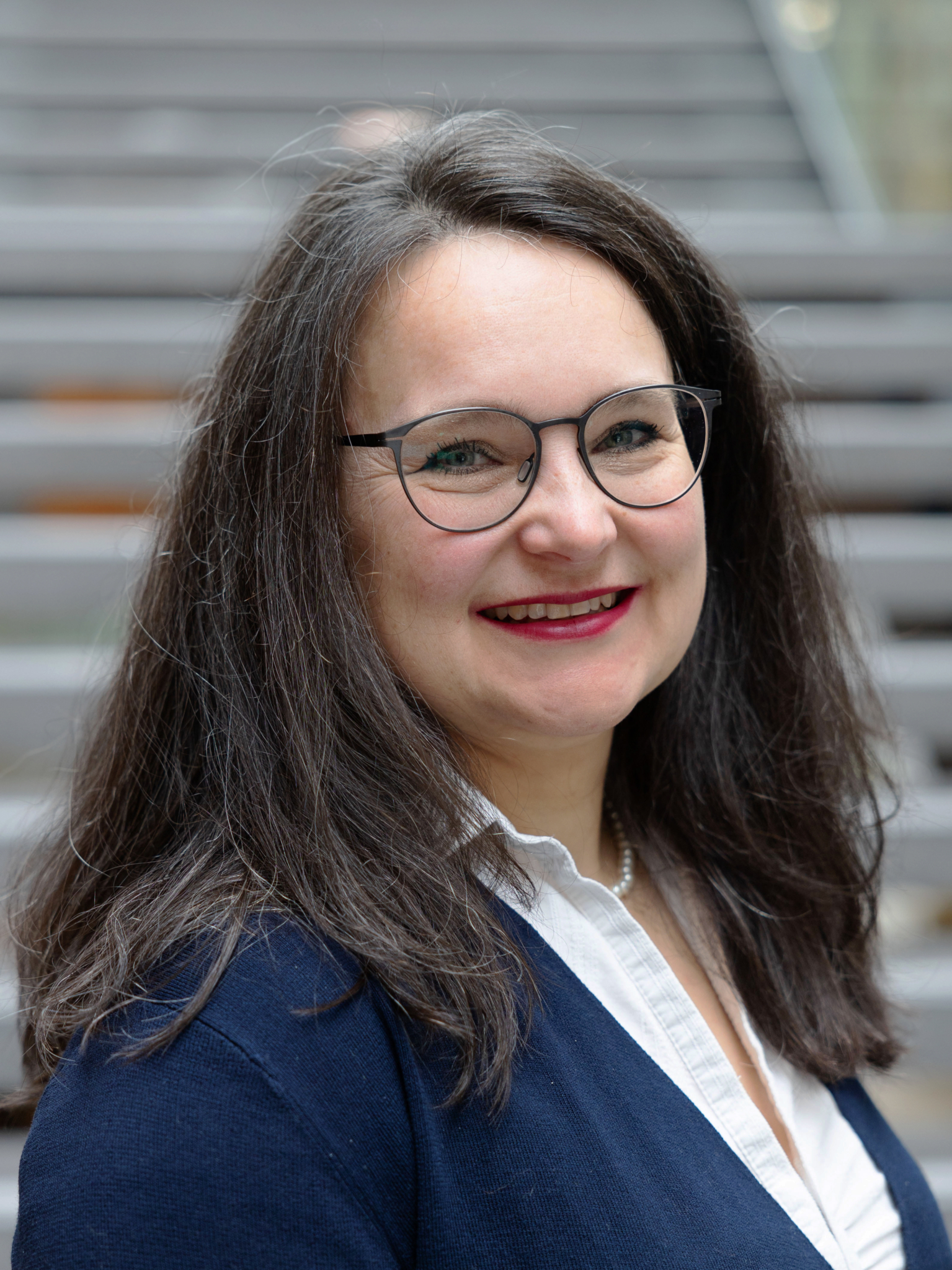
The designated PTM program director, FH-Prof. PD DI Dr. Jaroslaw Jacak, prepares graduates to develop and apply personalized, data-driven approaches in diagnostics, monitoring, and therapy.
Photo credit: FH Upper Austria


Stay informed and receive all Event- und Study-News.
Quick Links
I'll help you choose your study program.