Upper Austrian University of Applied Sciences dedicates its 25th anniversary to the future of a profession
What will tomorrow’s social workers need to know and be able to do?
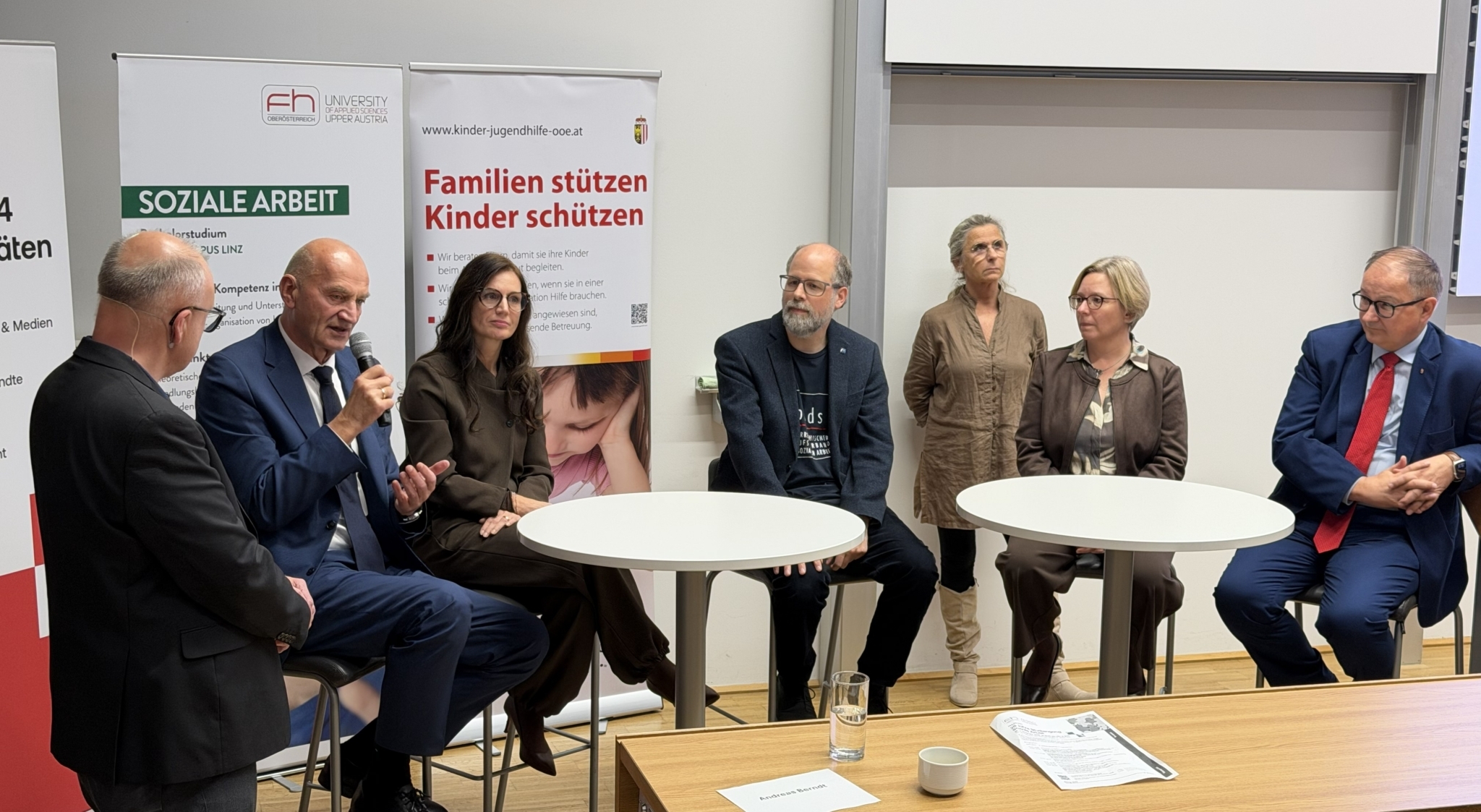
Panel discussion on the future of social work at the 25th anniversary celebration of Social Work at the Upper Austrian University of Applied Sciences, featuring Regional Councillors Dr. Christian Dörfel and Mag. Martin Winkler, Assistant Professor Manuela Linser, and practitioners Christoph Krenn and Katharina Etschmann.
Photo credit: FH OÖ
The stereotype of the naïve idealist trying to change the world is increasingly confronted with a far more complex reality: crises in health, climate and migration, along with a widening gap between rich and poor, are intensifying social tensions. At the heart of these challenges stands the profession of social work, whose practitioners are committed to actively fostering the inclusion of all people in society.
New challenges require new competencies. Social workers need a professional toolkit equipped with the right methods and instruments to respond effectively to evolving societal needs. Researchers, policymakers and frontline social work professionals used the anniversary celebration, “25 Years of Social Work at the University of Applied Sciences Upper Austria,” as an opportunity to look ahead and shape the future of the profession.
The foundation for this forward-looking perspective is strong: to date, the program has produced 1,760 graduates, while the full-time academic staff have successfully completed 25 research projects.
“My energy is dedicated to the future of social work. While we don’t know exactly what it will look like, it is becoming increasingly complex. Our goal is not just to keep pace with societal change, but to help shape it,” says sociologist FH-Prof. Dr. Daniela Wetzelhütter, Dean of the Faculty of Social Sciences in Linz and Head of the Bachelor’s degree program in Social Work at the University of Applied Sciences Upper Austria since March 2026.
In addition to wars, pandemics and humanitarian crises, she identifies demographic change, artificial intelligence, and the increasingly complex challenges of an individualised society as key issues shaping the future of the social work profession.
Degree Program as a “Future Lab” for the Skills and Tools Social Workers Need
Wetzelhütter describes the skills traditionally taught in the degree program as a constant foundation of the profession. At its core is method-based practice, ranging from individual casework, social group work and community work to broader social-environmental approaches. Students also acquire extensive expertise in areas such as law and ethics, alongside key competencies in counselling, research and professional development.
“The professional toolkit our students build during their studies is continuously updated and expanded, enabling graduates to respond to evolving challenges. Our campus, which is being further developed as a Social Campus, is a place where we are creating a future lab for the diverse fields of social work,” says Wetzelhütter. She highlights income security, the justice sector, integration, and especially child and youth welfare services as key areas of focus for the future.
Greater Support for Social Workers in Practice
Martin Winkler, Upper Austria’s Regional Councillor for Child and Youth Protection, expects social work to gain further importance over the next 25 years.
“Mental health issues, digital risks and poverty often affect children and families simultaneously. Social workers need the skills, confidence and time to respond effectively. Politics must reduce bureaucracy and strengthen support systems for those who support others.”
Social Work as Empowering People to Help Themselves
Christian Dörfel, Upper Austria’s Regional Councillor for Social Affairs and Integration, sees social work as a key enabler of self-reliance for people facing difficult life situations.
“Social workers provide stability and guidance. They help people identify opportunities, strengthen personal responsibility and support them on their path towards an independent life. Those receiving support must make use of their opportunities, and that requires professionals who both support and challenge them.”
During the 25th anniversary celebration of Social Work at the University of Applied Sciences Upper Austria, Dörfel and Martin Winkler discussed the future of the profession with Manuela Linser, Katharina Etschmann, and Christoph Krenn, Chair of Austria’s national professional association for social workers.
Social Work as a Driver of Social Change
Dean Daniela Wetzelhütter emphasizes the broader impact of the Department of Social Work:
“What is created through teaching and research has a lasting impact.”
This impact is reflected in the department’s graduates, its applied research activities, and more than 700 scientific publications, all of which contribute to shaping social work practice and society as a whole.
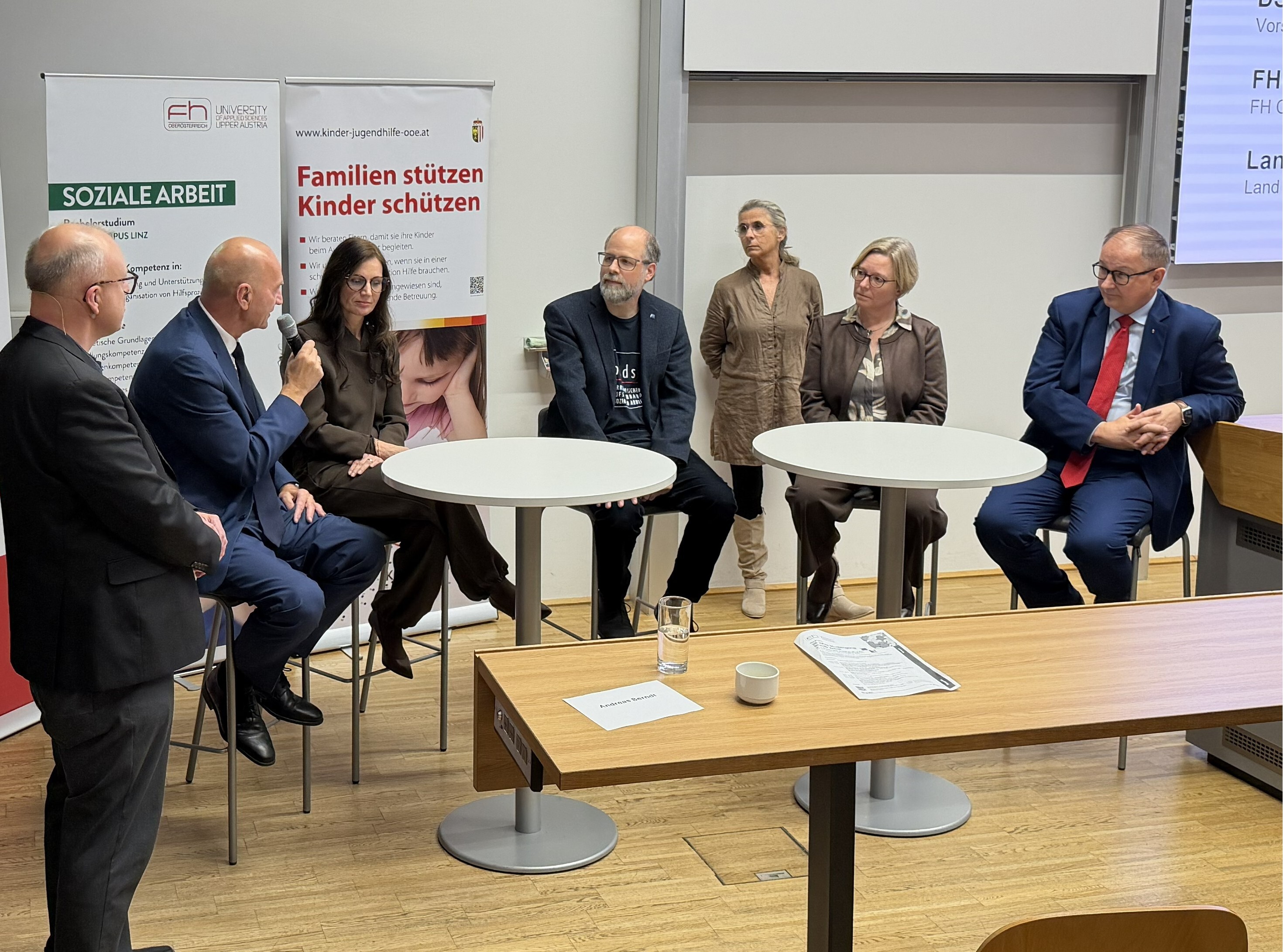
The growing importance of social work in the years ahead was one of the central themes discussed at the event.
Photo credits: FH OÖ
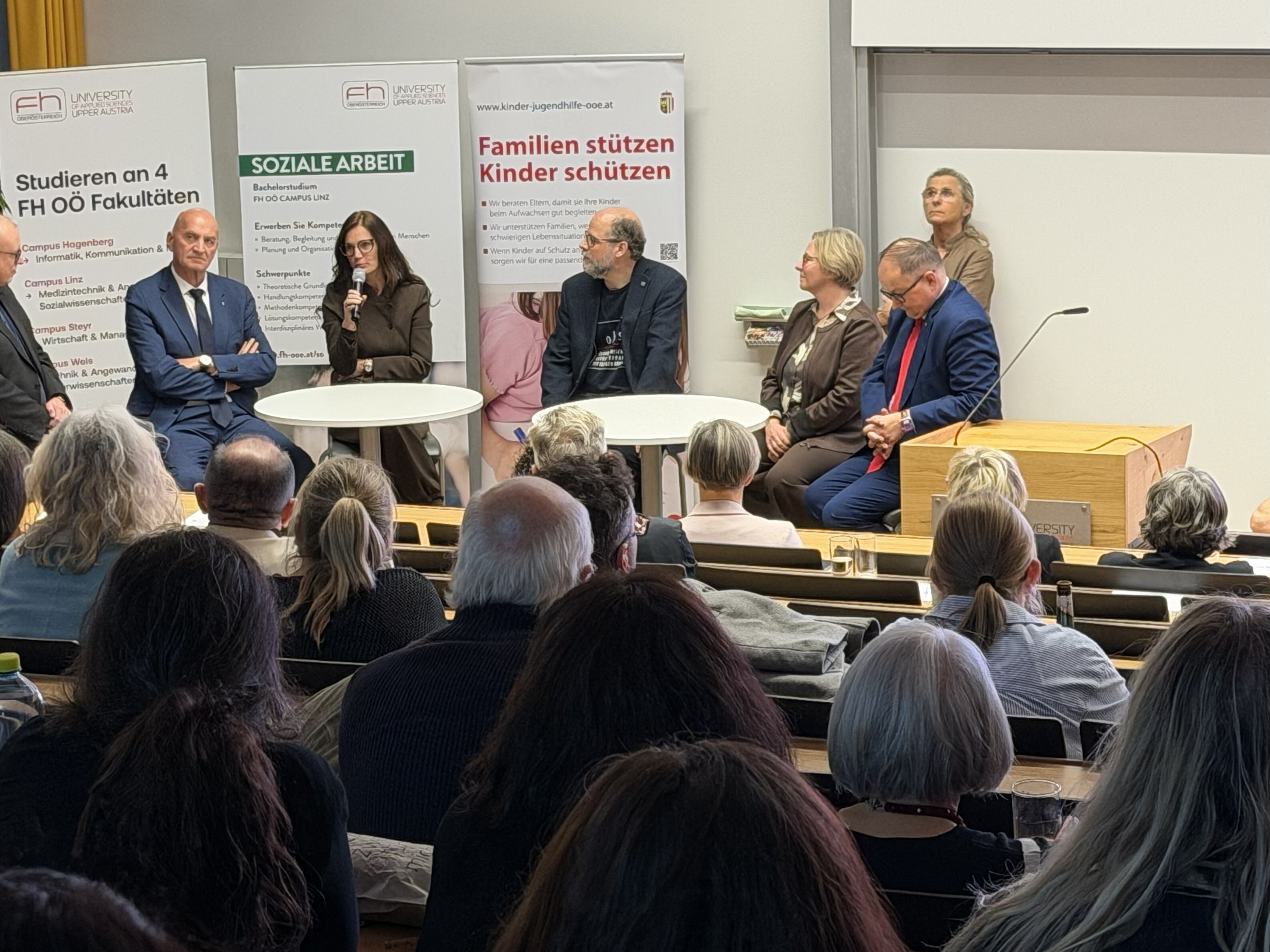
Experts from higher education, research and practice discussed current developments and future challenges in social work.
Photo credits: FH OÖ
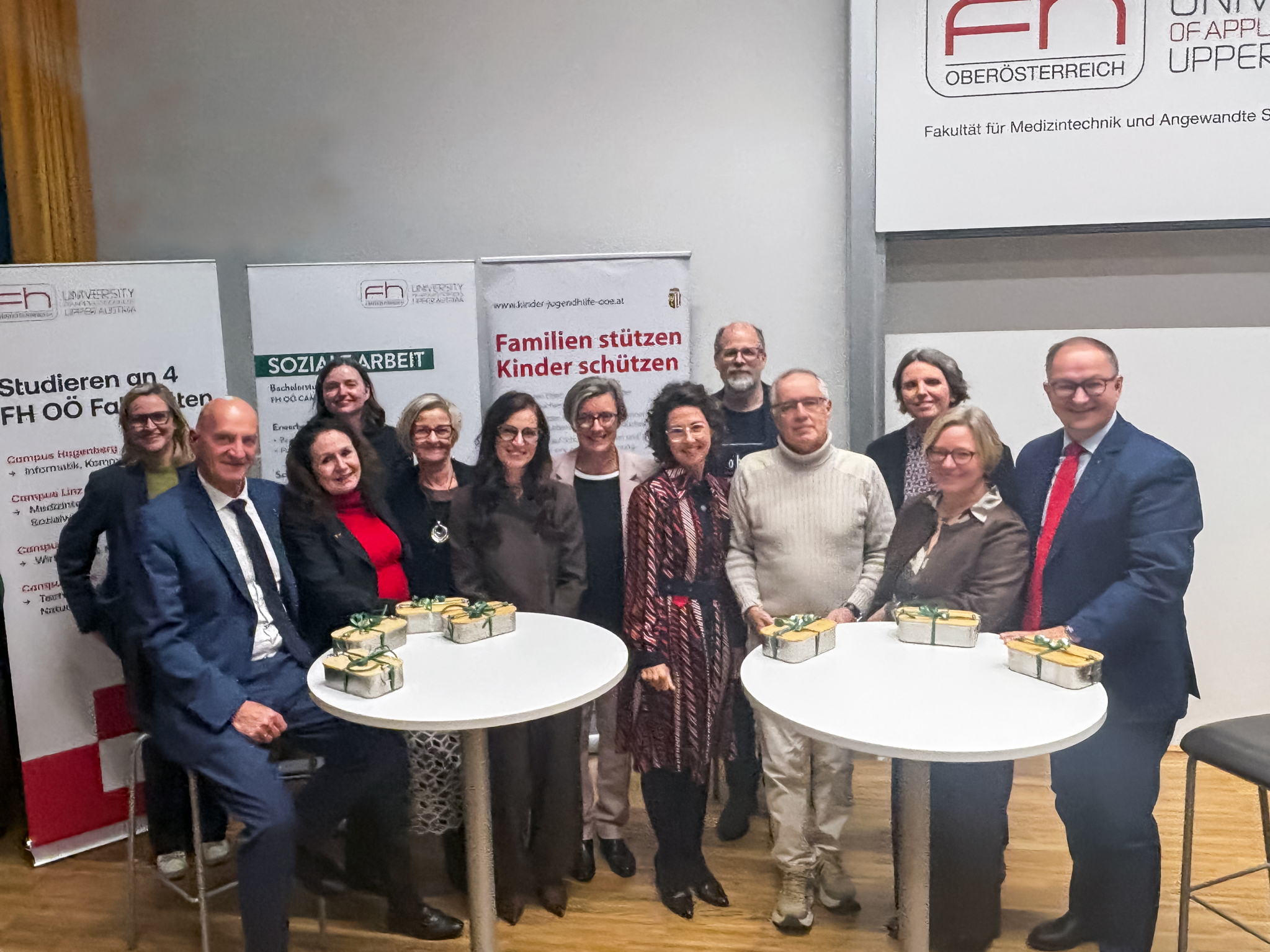
Participants in the panel discussion included, from left to right, together with Isolde Perndl, Managing Director for Finance and Administration at the University of Applied Sciences Upper Austria (centre), and Dr. Daniela Wetzelhütter, Dean of the FH Upper Austria Campus Linz (standing behind Ms. Perndl’s right shoulder).
Photo credits: FH OÖ
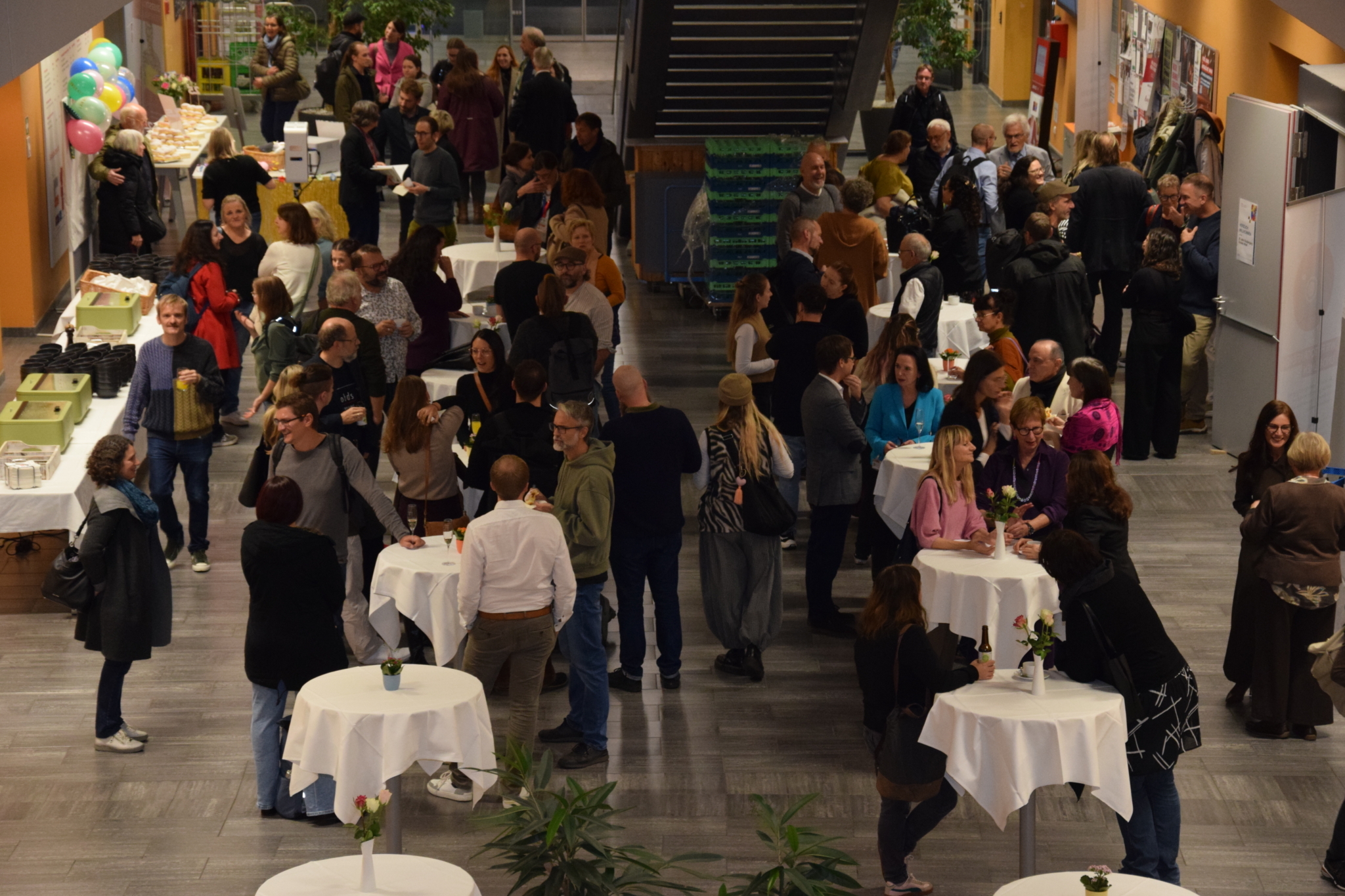
The Department of Social Work’s 25th anniversary celebration was attended by a large number of guests.
Photo credits: FH OÖ

Stay informed and receive all Event- und Study-News.
Quick Links
I'll help you choose your study program.