World Champions! FH Upper Austria’s Wels Team Is the World’s No. 1 in Rescue Robotics
Successful Title Defense: Team DYNAMICS from Wels Once Again Claims the RoboCup Rescue League World Championship for Austria

A remarkable achievement for Austrian robotics: Team DYNAMICS successfully defended its RoboCup Rescue League world title at this year’s RoboCup World Championship in South Korea. The team from the Wels campus of FH Upper Austria, led by Assistant Professor Dr. Raimund Edlinger, once again demonstrated on the international stage that it ranks among the world’s leading experts in rescue robotics. While Austria’s football team may have suffered disappointment on the world stage, this championship title is arguably even more meaningful, as the discipline is ultimately dedicated to saving lives.
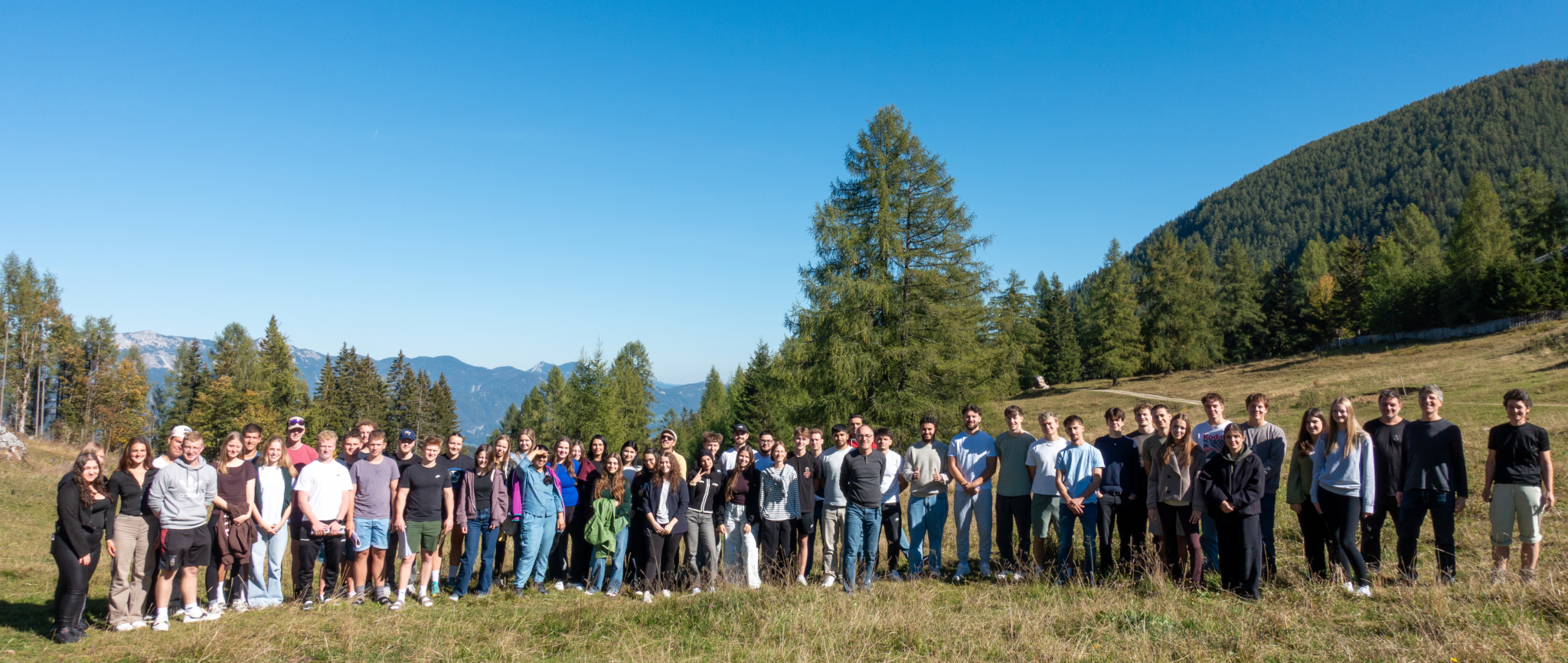
The winning team consisted of seven members who worked tirelessly throughout the intensive competition week, further refining and optimizing their latest flagship system – a highly advanced legged robot. The world championship squad included Master’s students in Automation Engineering David Oberngruber, Markus Ertl, and Benedikt Mayrhofer; Bachelor’s students Alexandra Eichberger, Oskar Gnadlinger, and Nathalie Weiß; and FH Assistant Professor Dr. Raimund Edlinger as team leader.
“With our new robotic system, we presented an exceptionally stable overall solution to an international audience and demonstrated how a perfectly coordinated team can win a world championship,” said Wels-based team captain Raimund Edlinger.
Professor Dr. Roman Froschauer, Dean of the Faculty of Engineering and Applied Natural Sciences in Wels, is particularly pleased about the title: “From a technical perspective, I am naturally delighted that we are among the international leaders in rescue robotics. As both Raimund Edlinger and I are active firefighters, we also understand the value of technological innovation in emergency operations. Robots can help us respond more effectively while at the same time improving the safety of emergency personnel.”
Dominant Performance from Start to Finish
From the very first starting signal, Team DYNAMICS took control of the competition and never looked back. Throughout the tournament, the team consistently delivered the strongest performance in the entire field. Whether in the demanding qualification rounds, the nerve-racking semifinals, or the final showdown, the team earned the highest scores at every stage of the competition.
In the end, Team DYNAMICS prevailed against exceptionally strong international rivals, including Shinobi from Japan, a two-time world champion; fellow Japanese team Quix, runner-up at the World Robot Summit; and Thailand’s iRAP team, eight-time RoboCup world champions.
LARX: Bringing World Championship Technology into Real-World Firefighting
The world championship victory is not only a competitive milestone but also an important scientific foundation for future innovation. Building on this success, the high-profile research project LARX will officially launch in September. The project is funded by the Province of Upper Austria through its Security Technologies & Solutions research program.
In LARX, world-class competition experience and cutting-edge research will directly reinforce one another. By winning the world championship, Team DYNAMICS has already demonstrated the practical and scientific excellence of its technologies. The next step is to transfer these innovations into real-world emergency response applications. Working closely with end users, the team will help shape the future of firefighting and disaster management through advanced robotics solutions.
LARX addresses growing challenges in disaster response and rescue operations, where emergency personnel increasingly face complex, hazardous, and dynamic scenarios such as collapsed buildings, tunnel accidents, industrial incidents, and hazardous material releases.
The project’s objective is to develop an integrated, modular robotic system for extreme-response missions and demonstrate its capabilities up to Technology Readiness Level 6 (TRL 6). At its core are two specialized robotic platforms: a legged robot for autonomous exploration and hazardous-material detection, and a tracked rescue robot featuring an advanced biomechanically safe casualty retrieval and transportation system. Multimodal sensor technologies for detecting hazardous substances, environmental conditions, and human victims will be fused in real time to generate a comprehensive operational picture that supports informed tactical decision-making.
AI-generated translation




Stay informed and receive all Event- und Study-News.
Quick Links
I'll help you choose your study program.