Industrial production is one of the fields where businessand society expect significant benefits from the expanded possibilities of artificialintelligenceand the use of humanoid — that is, human‑like — robots.
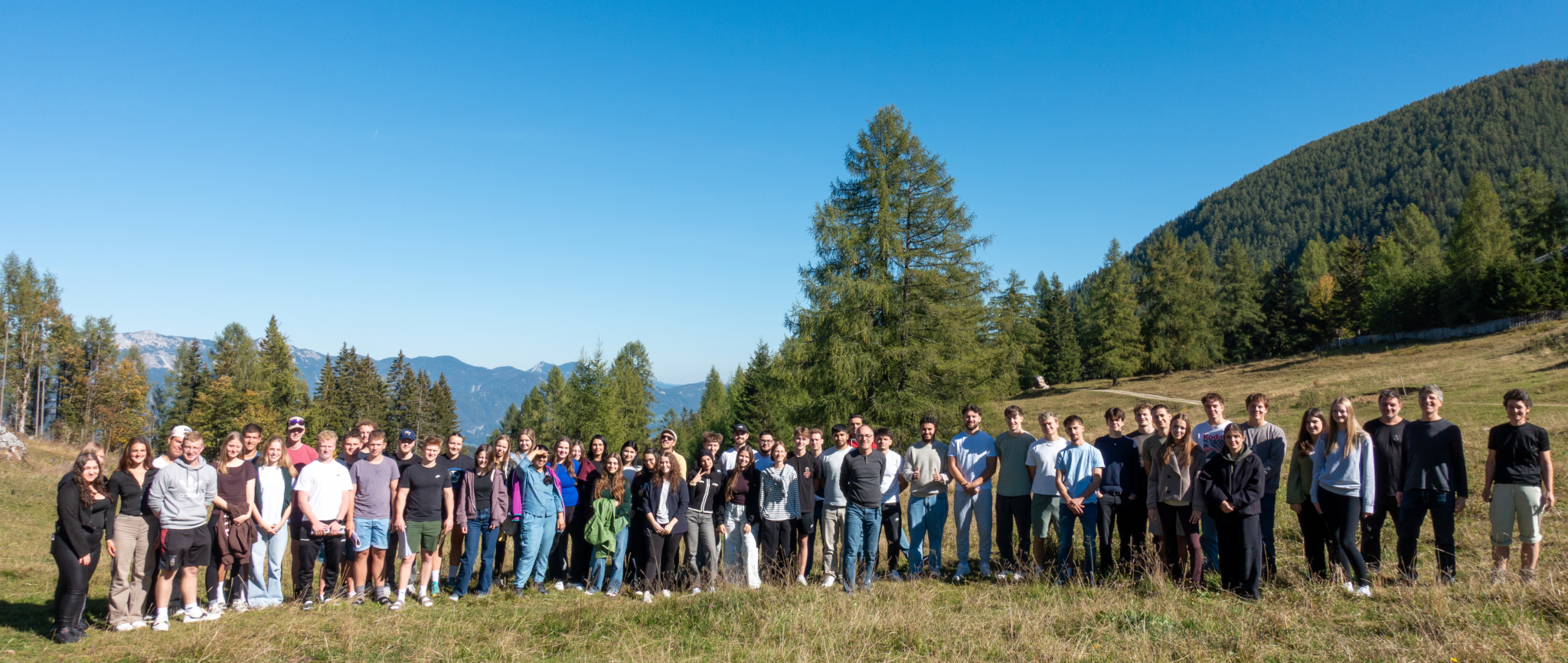
With a kickoff meeting at FH Upper Austria’s Wels Campus, a new cooperation between academia and industry was launched to advance the use of humanoid robots in industrial production. credits: FH OÖ
Profitability, process standardization, and the reduction of physically demanding or dangerous tasks are the main priorities here. FH Upper Austria, BRP‑Rotax GmbH & Co KG, and five additional companies from Upper Austria are working together to optimize the use of these new technologies. As another project partner, the Upper Austrian Chamber of Commerce is actively promoting the spread of this newly gained know‑how within the regional economy.
To support this effort, BRP‑Rotax, headquartered in Gunskirchen, has purchased a Unitree G1 EDU‑U6 humanoid robot and handed it over to the research team led by Thomas Schichl, MSc, from the School of Engineeringand Applied Natural Sciences at FH Upper Austria in Wels.
As part of this industry project, FH Upper Austria is responsible for the ‘training’ of the robot — in other words, developing methods for programming a humanoid robot. The next step takes place directly on the production floor at BRP‑Rotax: in various use cases, the robot is put into action, and its performance is evaluated afterward.
Challenges in Human–Machine Collaboration “Robots have played an important role in automation for decades,” emphasizes project lead Thomas Schichl from FH Upper Austria. He adds that “requirements such as collaborating with humans or learning processes to handle complex and variable tasks present entirely new challenges for programming robotic systems.” In this project, methods for programming humanoid robots are being evaluated, developed, and tested on defined use cases.
Mario Gebetshuber, General Manager BRP‑Rotax and Vice President Global Sourcing Operations Powertrain & Rotax Propulsion Systems, states: “We are bringing AI and humanoid robotics from the lab directly into our production — not as a vision of the future, but as a concrete contribution to supporting our employees and further driving innovation and competitiveness.”
What Happens to the Insights? Based on the newly gained know‑how, areas of application are defined and evaluated. The focus remains on additional use cases on the shopfloor — the production areas where real value creation happens — in order to understand both the potential and the limitations of current humanoid robotics. One key focus is physical AI, which allows production processes to be trained virtually and simulated in a highly realistic way.
BRP‑Rotax relies heavily on knowledge transfer: together with FH Upper Austria, the Upper Austrian Economic Chamber, and five other leading companies, the insights gained are being firmly anchored within the regional economy — ensuring long‑lasting impact in Upper Austria.
“As a strong regional partner, it is important to us to bring key technologies such as AI and humanoid robotics into industrial practice together with Upper Austria’s leading companies. Close collaboration across company boundaries is essential for sustainable innovation and competitiveness,” emphasizes Martin Bergsmann, AI spokesperson for the Industrial Division of the Upper Austrian Economic Chamber.