Impulses for the Construction Industry: FH Upper Austria Turns “Rivals into Friends”
New Training Model Brings Architecture and Civil Engineering Students Together Early in Their Studies

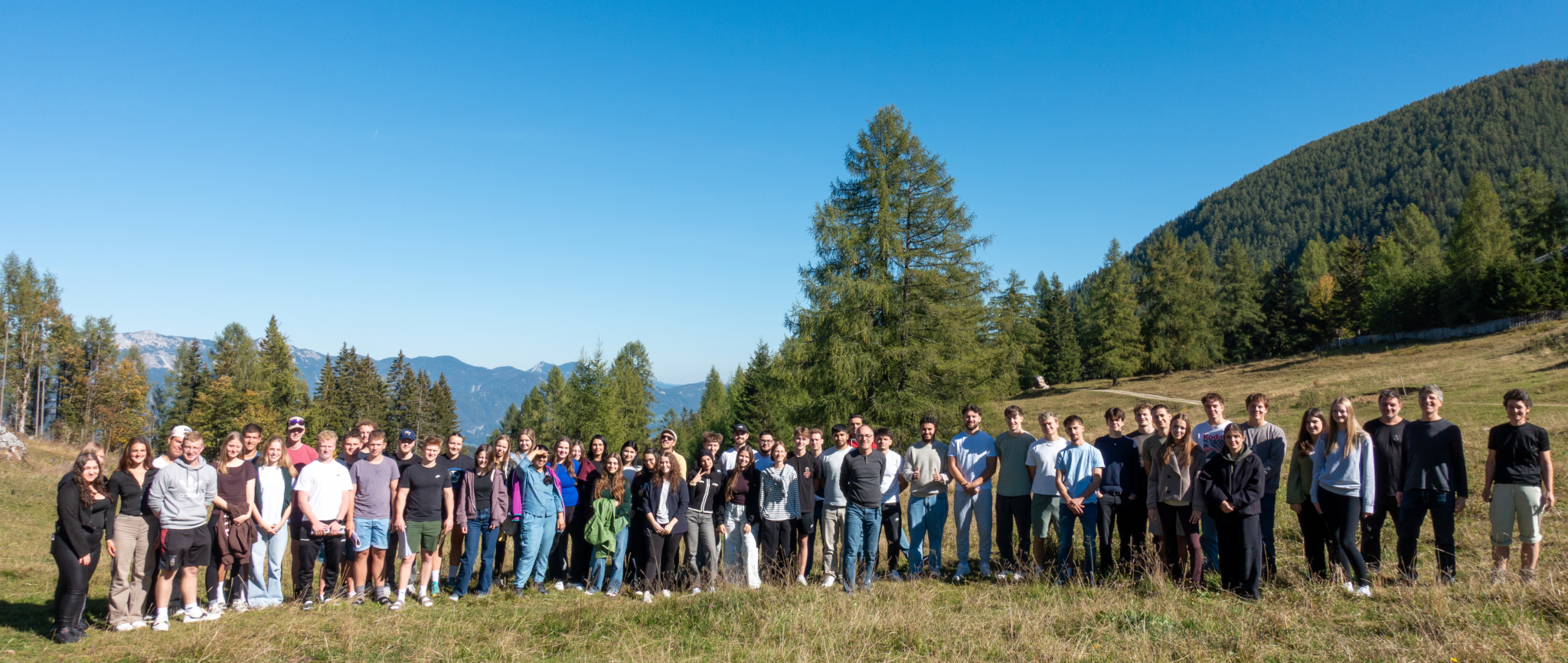
Participants of the Worskhop
spource FH OÖ
Architecture and civil engineering are natural partners in the construction industry—yet in practice, this relationship isn’t always conflict-free. To ensure both closely connected professions and their future experts embrace collaboration from the start, FH Upper Austria has developed a new training model at its Wels campus. Since about 40% of coursework overlaps, students can make a final decision on their major after an introductory phase and even earn additional degrees later on. This offers significant benefits for the construction sector. Students from both programs kicked off their academic journey with a team-building event at Edtbauernalm.
Since the French Revolution, architecture and civil engineering have increasingly been viewed as separate disciplines—one associated with the “fine arts,” the other with “rational” technical work. Today, advancing digitalization and FH Upper Austria’s new educational concept reunite what truly belongs together in construction: holistic thinkers and technically skilled professionals.
Team-Building Workshop
FH professors Werner Hochhauser and Khaled Saleh Pascha head the Civil Engineering in Structural Engineering and Architecture programs. They are the driving forces behind the academic competence center for construction now taking shape at the Wels campus. The Architecture program launched in fall 2025.
At the start of the semester, the two organized a multi-day workshop at Edtbauernalm in Hinterstoder for first-year students. The focus wasn’t just on architecture and engineering but also on social skills. Three additional faculty members accompanied the students, fostering communication and teamwork—skills that later formed the basis for initial technical tasks.
Designing Bridge Models in Competition
First, students worked in interdisciplinary pairs with FH professors Stefan Jaksch and Khaled Saleh Pascha to design and build small-scale, load-bearing bridge models. Next, they explored natural hazards and geotechnical engineering with FH professor Sophie Messerklinger during a hike to a reservoir, learning how to use geological maps. Finally, under the guidance of FH professor Werner Hochhauser and technician Josef Steinmair, students built bridges with a five-meter span—structures they had to cross themselves.
The workshop was financially supported by the Upper Austria Construction Guild.
“Easy Start” to College
The “Wels Model” offers a shared first semester and largely identical second semester for both programs. This allows flexible switching between majors after the first—or, with some limitations, even after the second—semester. Graduates of technical high schools (HTL) in construction can enter directly into the second semester.
The Wels Model’s Special Feature
Here’s the real highlight: By voluntarily taking a few additional courses during their studies, students can earn the other degree after completing their bachelor’s and two more semesters. This creates valuable synergies for the construction industry, producing broadly trained professionals who can approach projects from multiple perspectives.
Discover More at the Info Day in Late November
Interested students can explore this model through ongoing trial days. A prime opportunity is the FH Upper Austria Info Days—held at the Wels campus on November 28 from 9 a.m. to 5 p.m. Professors and students will answer questions and showcase practical examples in the lab.
Further details on the programs:
Civil Engineering in Structural Engineering: www.fh-ooe.at/bi
Architecture: www.fh-ooe.at/arch

Bridge models that the students contructed during the workshop
source: FH OÖ

During the workshop, students of both programs worked together
source: FH OÖ


Stay informed and receive all Event- und Study-News.
Quick Links
I'll help you choose your study program.